When it comes to automotive safety, few things are as critical as your vehicle’s lighting system. If your car is a few years old, it likely came equipped with factory standard halogen headlight bulbs. While these bulbs have been the industry standard for decades, modern technology has brought Light Emitting Diode (LED) headlights into the mainstream. If you are struggling with dim visibility during night drives, you might be considering an upgrade. Let’s take an in-depth look at Halogen versus LED bulbs to help you decide which option is best for your vehicle.
1. Understanding Halogen Bulbs
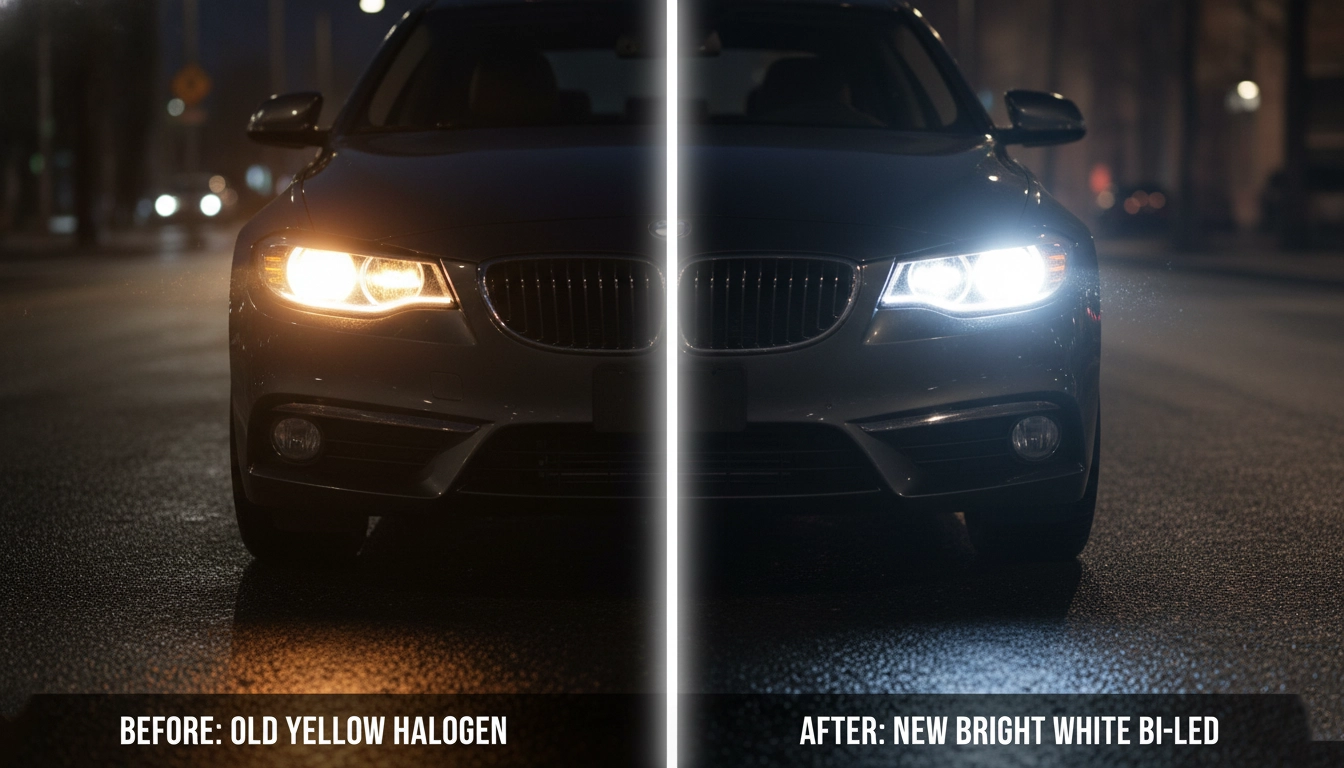
Halogen bulbs work similarly to traditional incandescent household bulbs. They contain a tungsten filament enclosed in a small capsule filled with halogen gas. When electricity passes through the filament, it heats up and glows, creating a warm, yellowish-white light.
- The Pros: The biggest advantage of halogen bulbs is their affordability. They are extremely cheap to purchase and very easy to replace, requiring no special tools or wiring modifications.
- The Cons: Halogens are highly inefficient. They waste about 80% of their energy as heat rather than light. Because they rely on a burning filament, they have a short lifespan, usually lasting only between 500 to 1,000 hours. Furthermore, their yellowish beam does not reach very far down dark roads.
2. Understanding LED Bulbs
LED bulbs operate on an entirely different technology. Instead of heating a wire filament, they pass electricity through a semiconductor to create light. This process creates very little heat and generates a much cooler, crisp white light.
- The Pros: The most noticeable benefit of LEDs is their incredible brightness. They produce a sharp, focused beam that closely mirrors natural daylight. This allows you to spot road hazards, pedestrians, and street signs much earlier. Additionally, LEDs are incredibly durable and efficient, with an average lifespan of 30,000 to 50,000 hours—meaning they will likely outlast your car.
- The Cons: LED bulbs have a higher upfront cost. While the prices have dropped significantly, they are still more expensive than halogens. Also, depending on your car’s model, upgrading to LEDs might require a plug-and-play conversion kit or error-correcting decoders to prevent dashboard warning lights.
The Verdict: Which One Should You Choose?
If you only drive during the day or live in heavily lit urban cities, traditional halogen bulbs might be perfectly fine for your budget. However, if you frequently drive on dark highways, rural roads, or in bad weather, upgrading to LED headlight bulbs is a game-changer. The massive boost in nighttime visibility, combined with the fact that you will almost never have to replace them again, makes LEDs the superior and safer choice for modern drivers.